ServicesStorm Damage Repair
Storm Damage Repair in Lynwood
After a hard wind or a long soaking rain, we get on your roof, photograph what moved, cracked or tore, and tell you plainly what needs fixing. One person handles your questions, the insurance paperwork and the crew until the work is done.
What Storm Damage Repair Covers
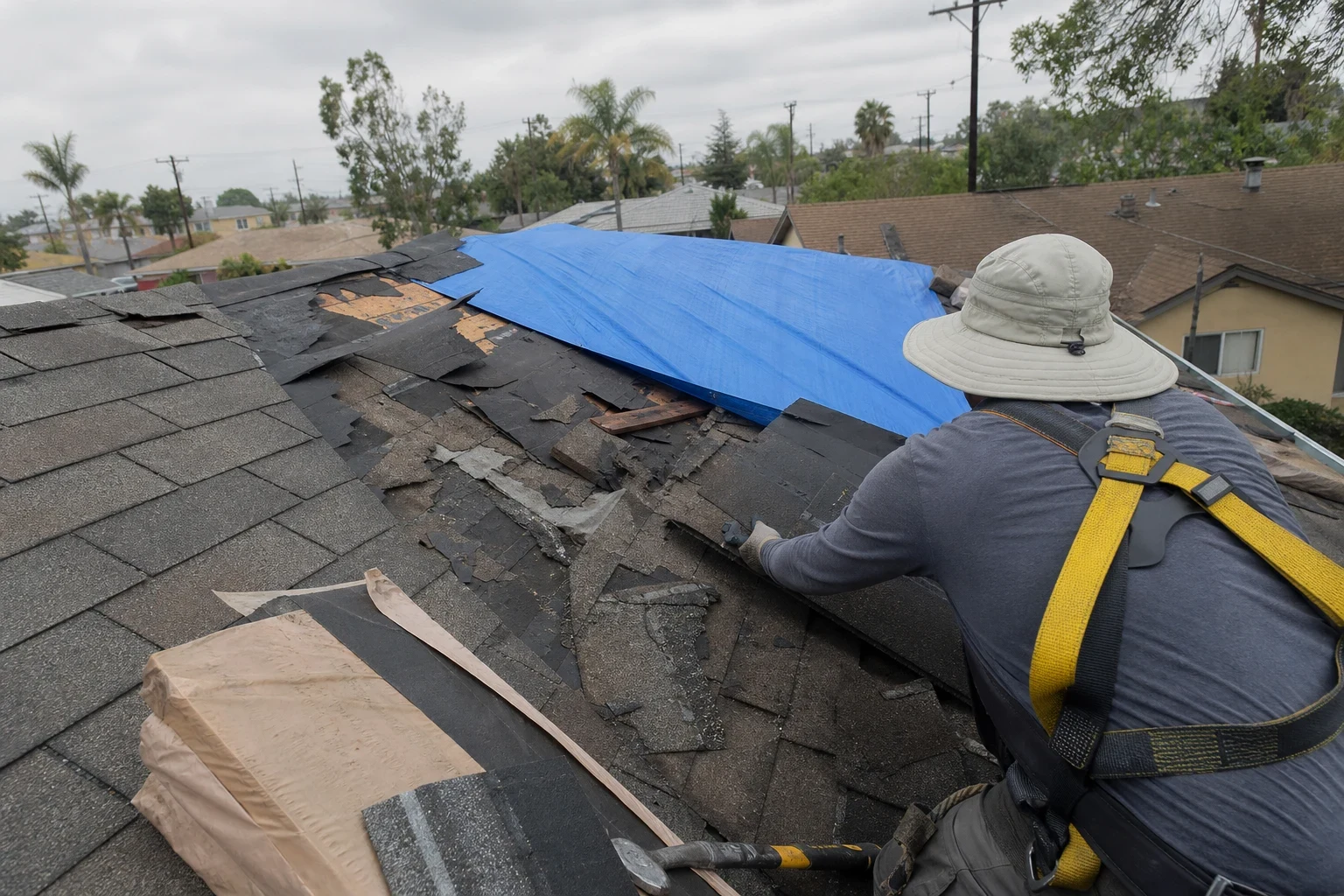
Storms rarely wreck a whole roof. More often the wind lifts a row of shingles, cracks a few tiles, peels back flashing at a chimney or drops a branch on the edge. Water then finds that opening on the next rain. Storm damage repair means finding those spots, fixing them right and making sure nothing underneath got wet and stayed wet.
Around Lynwood, the trouble usually shows up after strong winter storms or dry fall winds. Either way, the fix starts the same. We look first, show you what we found, and only then talk about cost.
You deal with one person the whole way. That person schedules the inspection, writes your estimate, talks with your insurance adjuster if you file, and checks the job at cleanup. No passing you around.
What's Included in the Work
Free inspection with photos
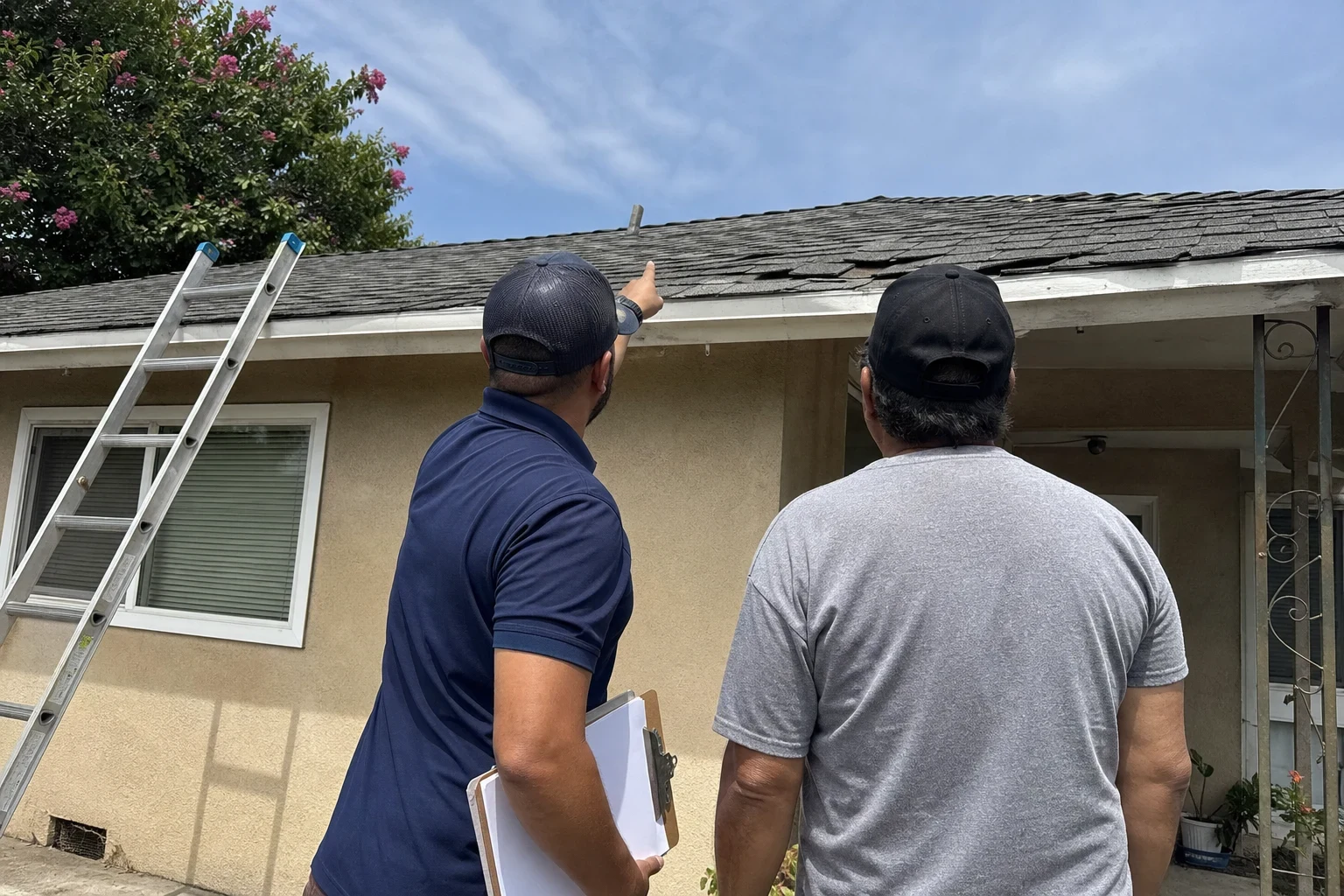
We check each slope, go into the attic when we can reach it and photograph every damaged spot. The photos are yours to keep, so you see what we saw.
Free written estimate
Each repair is listed on its own line: shingles, tiles, flashing, decking, gutters. If a patch will do, the estimate only lists the patch. If the roof is past patching, we show you why and price a roof replacement beside the repair so you can compare.
Insurance claim help
We work directly with your insurance claim, sharing our photos and measurements with your adjuster and meeting them on the roof if needed. Coverage is the adjuster's call; our job is to show the damage clearly.
Shingle, tile and flat roof repair
We match your existing roof as closely as possible. Broken clay or concrete tiles get replaced, and we check the underlayment under them.
Flashing, vents and gutters
Wind works metal loose before it tears shingles. We reseal or replace flashing and vent boots, and reattach or replace gutters that came away.
Cleanup at the end
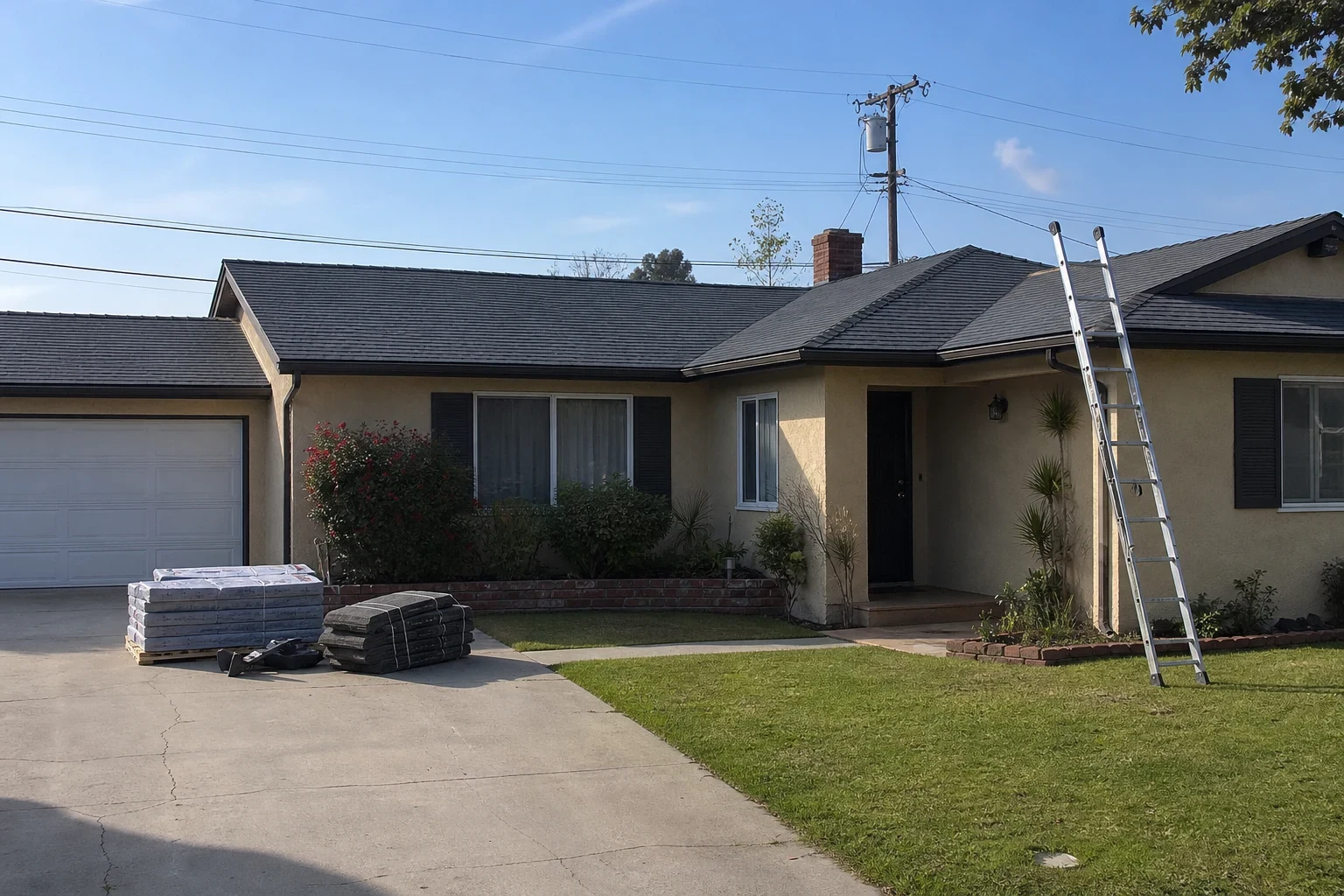
We haul away old material, pick up nails with a magnet and sweep the yard and driveway.
Signs Your Roof Took Storm Damage
- Shingles in the yard
- Pieces on the ground mean pieces are missing up top. Even one gap lets water reach the wood.
- Cracked or shifted tiles
- Tiles can crack from a branch or slide out of line in high wind. From the street it may just look like a crooked row.
- New stains on the ceiling
- A brown ring that showed up after the rain is water that got past the roof. It usually spreads before it dries.
- Bent flashing or loose gutters
- Metal that is lifted, bent or hanging off the fascia is an easy entry point for the next storm.
- Branches on the roof
- Even a small limb can punch through decking or crack tiles. Have it looked at before you climb up to pull it off.
How a Storm Repair Job Runs
- 1
You call, we set the visit
Your contact asks a few questions and books a time for the free inspection. Spanish or English, whichever you prefer.
- 2
Inspection and photos
We check the roof surface, flashing, gutters and attic. If water is getting in, we cover the opening with a tarp so it stays dry until the repair.
- 3
Written estimate and claim support
You get a line-item estimate and the photos. If you file a claim, we send our documentation to your adjuster and walk the roof with them if asked.
- 4
Repair day
We protect plants and the driveway, remove damaged material, check the decking underneath, then install new material and reseal flashing. Most storm repairs are done in a day.
- 5
Final check and cleanup
Your contact looks over the finished work with you, then we clean up and haul everything away.
What Moves the Cost of Storm Repairs
Storm repairs never cost the same twice, since the damage always lands somewhere different. Your written estimate lists every item, so you can see what you're paying for.
- How much is damaged
- Twelve shingles is a quick job. A fully torn slope needs more material and more time.
- Roof material
- Tile needs more care to repair than shingles, and finding a match for older tile can take longer.
- What's under the surface
- Soaked decking must be removed. We can only be sure once the damaged roofing comes off, and we show you before we replace any of it.
- Pitch and access
- Steep roofs and narrow side yards slow the crew and need extra safety setup.
Common Questions After a Storm
- Do I phone my insurer before I have the roof looked at?
- A lot of homeowners have us look first. Then you know if there is real damage and roughly how much before anything goes on file with your insurer. Small damage you might just pay for yourself. Bigger damage is worth a claim, and our photos give your adjuster a clear picture.
- Will you deal with my insurance adjuster?
- Yes. We work directly with your insurance claim, share our documentation and can meet the adjuster at your home. We do not decide what your policy covers. That is between you and your insurer.
- Can a storm-damaged roof be repaired, or does it need replacing?
- Most of the time it can be repaired. If the roof was already old and worn out before the storm hit, or the damage shows up on most sides of the house, a new roof can be the better money. We tell you which one we think fits and why.
- What should I do before you get there?
- Stay off the roof. Put a bucket under any drip and move things out of the way. Take a few photos of damage you can see from the ground.
- Do you work outside Lynwood?
- Yes. We also work in South Gate, Downey, Compton, Bellflower, Paramount and nearby cities.
Get Your Roof Looked At After the Storm
One phone call sets up a free roof inspection. You get pictures of the damage, an estimate on paper broken out item by item, and the same person on your job until the last nail is swept up.