ServicesRoof Inspections
Roof Inspections in Lynwood, From Ladder to Answer by One Person
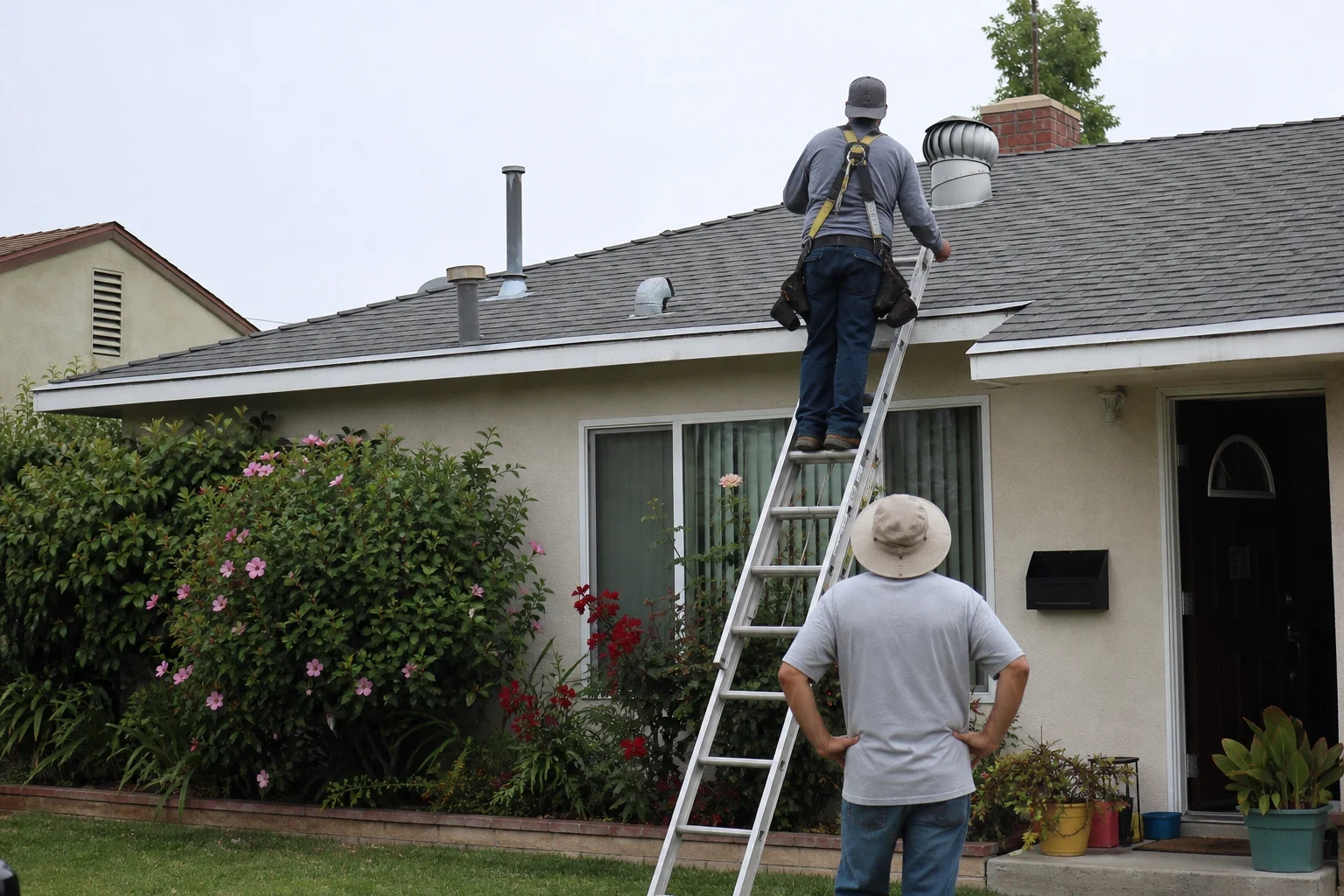
We check your roof, flashing, gutters and attic, then sit down with you and go over what we found. The inspection is free. The person who climbs your roof is the same person who answers your questions afterward.
What You Learn From a Roof Inspection
An inspection is a close check of your roof meant to catch small issues before they become leaks. We walk the roof, look in the attic when it's reachable and explain our findings in plain language. There's no charge.
One person handles everything. Whoever schedules the visit also does the inspection, reviews the photos with you and prepares any estimate. Call with a question a week later and you reach that same person.
It's worth doing before buying or selling a house, after a heavy winter rain, as your roof gets older, or when a stain appears and you want to know how serious it is. Sometimes your roof turns out to be in good shape, and we'll tell you so.
What We Check on Every Inspection
The roof surface
We look for cracked, curled or missing shingles, slipped or broken tiles, and blisters or standing water on flat sections. Each roof type fails in its own way, so we check for the failures that fit yours.
Flashing and vents
Most leaks start where something cuts through the roof: vent pipes, chimneys, skylights and the wall line where an addition meets the house. We check the metal, the sealant and the rubber pipe boots, which dry out and crack after years of strong sun.
Attic and decking
With attic access, we go up with a light and look for water stains, dark spots in the wood and daylight through the boards. On the roof we feel for soft spots that point to rotted decking underneath.
Gutters and drainage
We make sure gutters are attached, sloped and clear, and that downspouts carry water away from the house. Water that backs up at the edge rots the fascia and the first row of decking.
Shingle install check
On shingle roofs we look at nailing, starter rows, ridge caps and venting, so we can tell you whether a problem is normal wear or the way the roof was put on.
Photos and a written summary
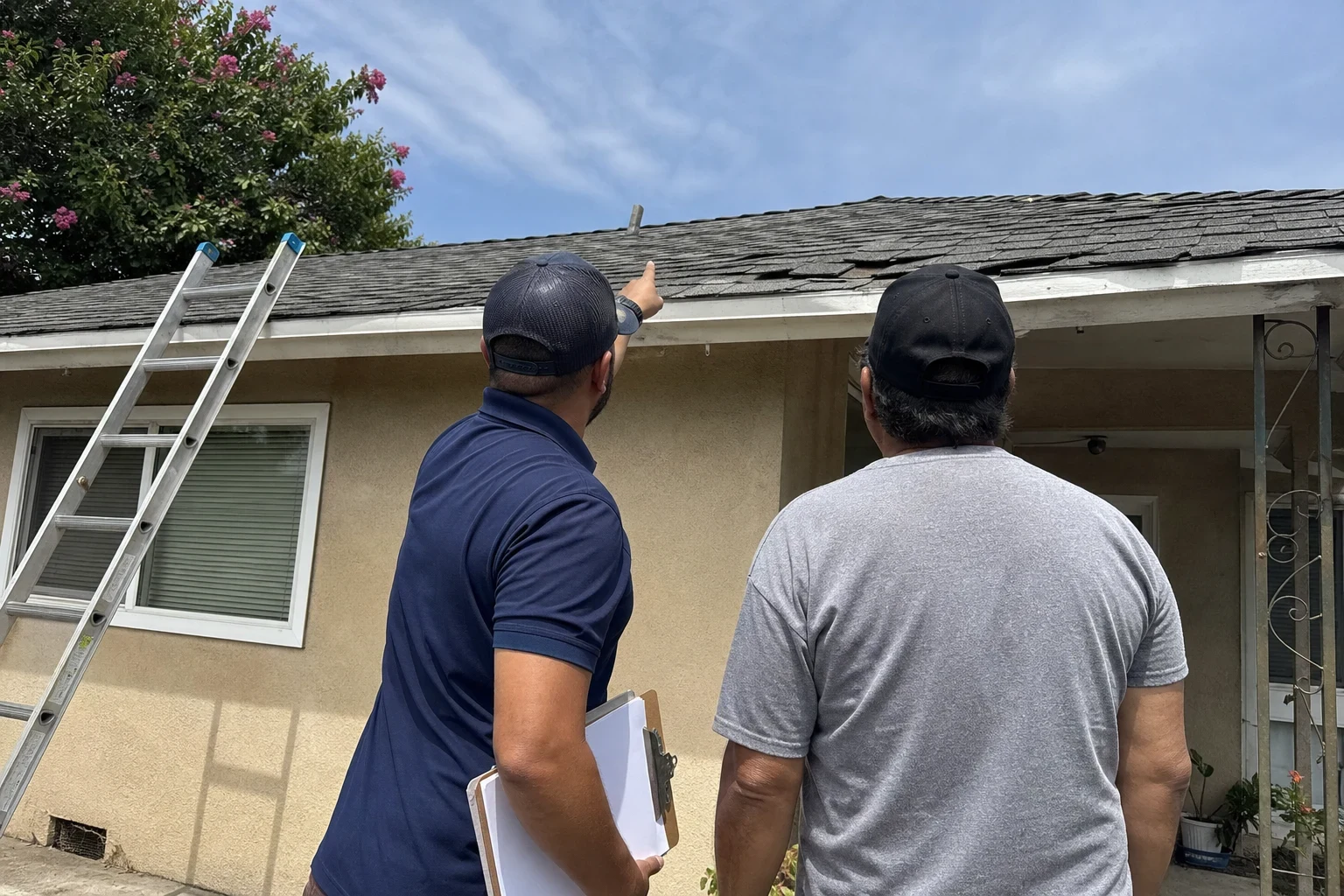
You get photos of what we saw, with the problem spots pointed out. If something needs work, the written estimate is free and lists each item on its own line.
Signs It's Time to Have Your Roof Checked
- Water marks inside
- A yellowed patch overhead or paint that puffs up tells you water found a way in. The mark you see indoors usually sits a few feet downhill from the real opening in the roof.
- Granules in the gutters
- Asphalt shingles shed their gritty coating as they age. Piles of it in the gutters or dark bald patches on the roof mean the shingles are wearing thin.
- Cracked or slipped tiles
- Tile itself lasts a long time, but the underlayment beneath it does not. A broken or shifted tile lets sun and water reach that layer.
- An older roof
- If your roof is 15 to 20 years old, or nobody knows its age, a careful look gives you a rough idea of the years it has left. Budgeting for a roof is a lot easier with that number in hand.
- After strong wind or heavy rain
- Lifted shingle edges and loose flashing are easy to miss from the ground. A check after a rough storm catches them before the next one.
- Buying or selling
- A roof report helps you know what you're getting, or fix small items before a buyer's inspector finds them.
How Your Inspection Goes
- 1
A short phone call
You talk to the person who will do your inspection. We ask about the roof's age, any leaks and a good time to come by. We work in English and Spanish.
- 2
On the roof
We walk the roof when it's safe and put our weight only where tile and shingles can carry it. For each problem we take a tight shot of the damage plus a wider one that shows where it sits on your roof.
- 3
Attic and walk-around
We check the attic from inside, then walk the outside of your home to look at gutters, fascia and the roof edges.
- 4
Going over what we found
We show you the photos and explain what's wear, what needs work and what can wait. If you need repairs, you get a free written estimate. If the damage looks storm related, we explain how a claim works. There's no push to decide that day.
What Sets the Price of Work an Inspection Turns Up
You pay nothing for the inspection. Whatever it uncovers determines the price of any work that comes next. These factors shape that price, and each appears on your written estimate.
- How big the problem is
- A cracked pipe boot is a quick fix. Rebuilding flashing down a full wall or redoing part of the roof takes more material and labor.
- Type of roofing
- Tile work is slower because each piece must be lifted and reset without cracking. Flat and shingle roofs each call for their own materials and methods.
- Hidden damage below
- Rotted decking or worn-out underlayment must be replaced before new roofing goes down. You see photos of any damage so the price is clear.
- Steepness and reach
- Steep slopes, two-story homes and narrow side yards need more safety setup and more time.
- Permits
- Bigger jobs such as a reroof require a city permit, which we include in the estimate.
Common Inspection Questions
- Do I pay anything for the inspection?
- No. The inspection is free, and so is the written estimate if work is needed. Having us take a look costs you nothing.
- Should I be home for it?
- It's useful. Someone needs to give us attic access, and the photos are easier to follow when we review them together. If you're away, we can inspect the exterior and go through the photos with you by phone later.
- Could walking on my tile roof crack it?
- Tile breaks when weight lands in the wrong spot. We step on the lower, supported part of each tile, and on some roofs we check from a ladder at the edges rather than walking across.
- Do you help with insurance claims?
- Yes, we work directly with your insurance claim and give you photos plus a written list of our findings. The adjuster decides coverage, and we explain every step so nothing catches you off guard.
- Are you going to talk me into a new roof?
- No. Most roofs we inspect need a repair or no work at all. If yours is near the end, we show you the photos that point to it and give you a straight estimate of how long it has left.
- How often should I have my roof checked?
- For a roof in good condition, once every few years is enough. Also schedule one after a major storm, before a sale or purchase, and when the roof is older than 15 years.
Learn What Shape Your Roof Is In
A single visit from a single person gets you a plain answer about what your roof needs. If the answer is nothing, you'll hear that.