ServicesCommercial Roofing
Commercial Roofing for Lynwood Businesses
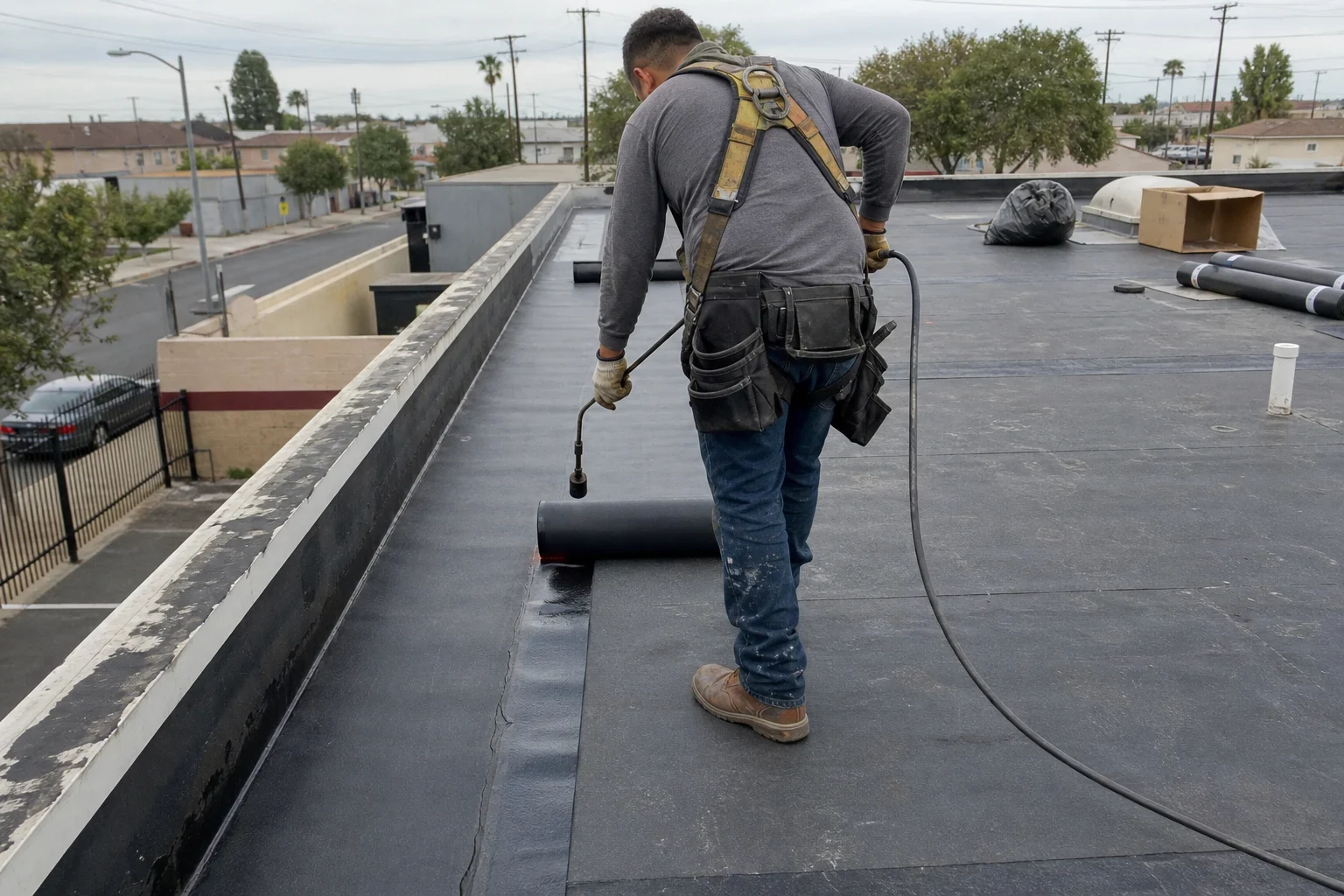
Shops, offices, small warehouses and apartment buildings get roof repairs and replacements from us. A single contact inspects the roof, prices the job, books the crew around your hours and signs off on the cleanup. You never have to wonder who's in charge.
Roof Work for Buildings That Can't Close for a Week
Most commercial roofs around here are flat or low-slope. Water doesn't run off them fast, so small problems at seams, drains and rooftop units turn into ceiling stains over a tenant's register or a storeroom.
We look at the whole roof first, then tell you plainly whether a repair, a coating or a new roof makes sense. Many roofs have years left in them with the right repair. Some don't, and we'll say so.
Your contact stays the same from the first visit to the final walk. That person talks to your property manager or tenants, sets the work days and answers your calls.
What Our Commercial Roofing Covers
Flat and low-slope repairs
We fix split seams, blisters, punctures and worn spots on TPO, modified bitumen and older built-up roofs. Patches are matched to the material that's already there so they bond and hold.
Drains, scuppers and parapets
Clogged drains and cracked parapet caps are behind a lot of commercial leaks. We clear and reseal drains and scuppers and repair the flashing where the roof meets the wall.
Rooftop unit curbs and penetrations
HVAC curbs, vent pipes and conduit all cut holes in the roof. We reflash and seal them, which is often where a stubborn leak finally stops.
Roof coatings
On a sound roof, a reflective coating can add years and cut heat on the deck. We only suggest it when the membrane underneath is still solid.
Full replacement
When the roof is past saving, we tear off, check the deck, and install a new system. California's energy code can require a reflective surface on a low-slope reroof, and we plan for that from the start.
Pitched sections on mixed buildings
Some apartment and office buildings have shingle roofs over part of the structure. We handle those sections alongside the flat areas so you aren't hiring two crews.
Warning Signs on a Commercial Roof
- Puddles still there two days after rain
- Water that won't drain off wears out the seams and puts weight on a deck that wasn't built to carry it.
- Ceiling stains below rooftop units
- A mark under an HVAC unit usually points to a failed curb seal. Found early, it's a simple fix.
- Blistering, cracking or exposed spots
- Bubbles and cracks shaped like alligator skin mean the surface is drying out. Once the felt or fabric shows through, leaks aren't far off.
- Membrane edges pulling up
- Loose laps on a membrane let wind and water get underneath, and winter storms find them fast.
- Repairs piled on old repairs
- If every rainy season brings another repair call, compare what you keep spending on patches with the price of a new roof. We'll put both figures in front of you.
Steps in a Commercial Roofing Job
- 1
Roof walk and core sample
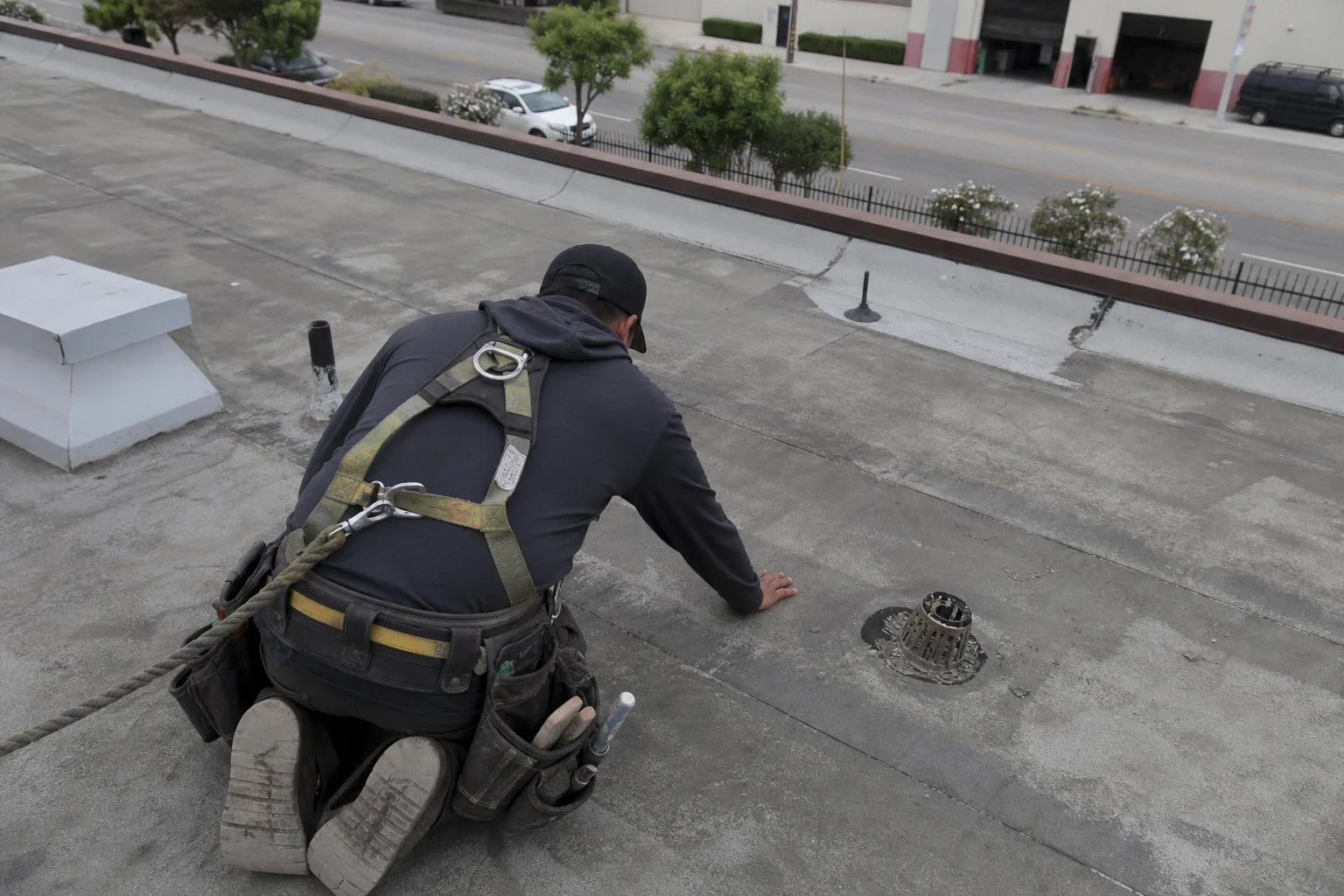
Your contact covers the entire roof, takes photos of problem areas and may pull a small core to see how many layers are there. You keep the photos.
- 2
Itemized estimate
You get a free written estimate with the work split into separate lines. If a repair is the better choice, we quote the repair.
- 3
Planned around your operations
We set work days around your business hours, deliveries and tenants. Noisy tear-off can start early, and we let occupants know beforehand.
- 4
Permit and installation
If the job needs a permit, we get it and schedule the inspection. The crew marks off the work area and keeps entrances clear.
- 5
Haul-off and final walk
We haul off the old material, sweep the lot for nails and walk the finished roof with you or your property manager.
What Drives a Commercial Roof Price
Prices on commercial roofs vary more than most owners expect. Two buildings of the same size can land far apart once we see what's under the top layer. Here's what matters most.
- Square footage and existing layers
- Roof area is where the price begins. Two or three old roofs stacked up mean more tear-off time and more hauling.
- Deck condition
- Wet insulation or soft decking has to come out and be replaced. You'll see photos before it's added to the estimate.
- Equipment and roof openings
- Every unit, vent and skylight needs its own flashing. A crowded roof takes more labor than an open one.
- Which system you choose
- Coatings, single-ply membranes and modified bitumen vary in price and how long they last. We'll weigh them for your building.
- Access and scheduling
- Hard-to-reach roofs, crane lifts and after-hours work that lets your business stay open all add time.
Questions From Building Owners
- Will my business have to shut down during the work?
- Usually not. Repairs and coatings are fairly quiet. For tear-offs, we plan the noisiest work for early hours or slow days and keep doors and parking open as much as we can.
- Could a coating work instead of a new roof?
- Sometimes. A coating works when the membrane is still bonded and the insulation under it is dry. If water is already trapped inside the roof, a coating locks it in, and we'll tell you that.
- Can you coordinate with my tenants or property manager?
- Yes. Your contact can talk with the people on site, give notice before work days and answer their questions, so you don't have to pass messages along.
- Do you help with insurance claims on commercial buildings?
- Yes, we work directly with your insurance claim. We document the damage with photos and measurements and can meet the adjuster on the roof. The adjuster still decides coverage.
- What areas do you serve?
- Buildings in Lynwood and nearby cities like South Gate, Compton, Downey and Paramount. If yours is a bit farther out, ask us on the call.
Get a Clear Answer on Your Building's Roof
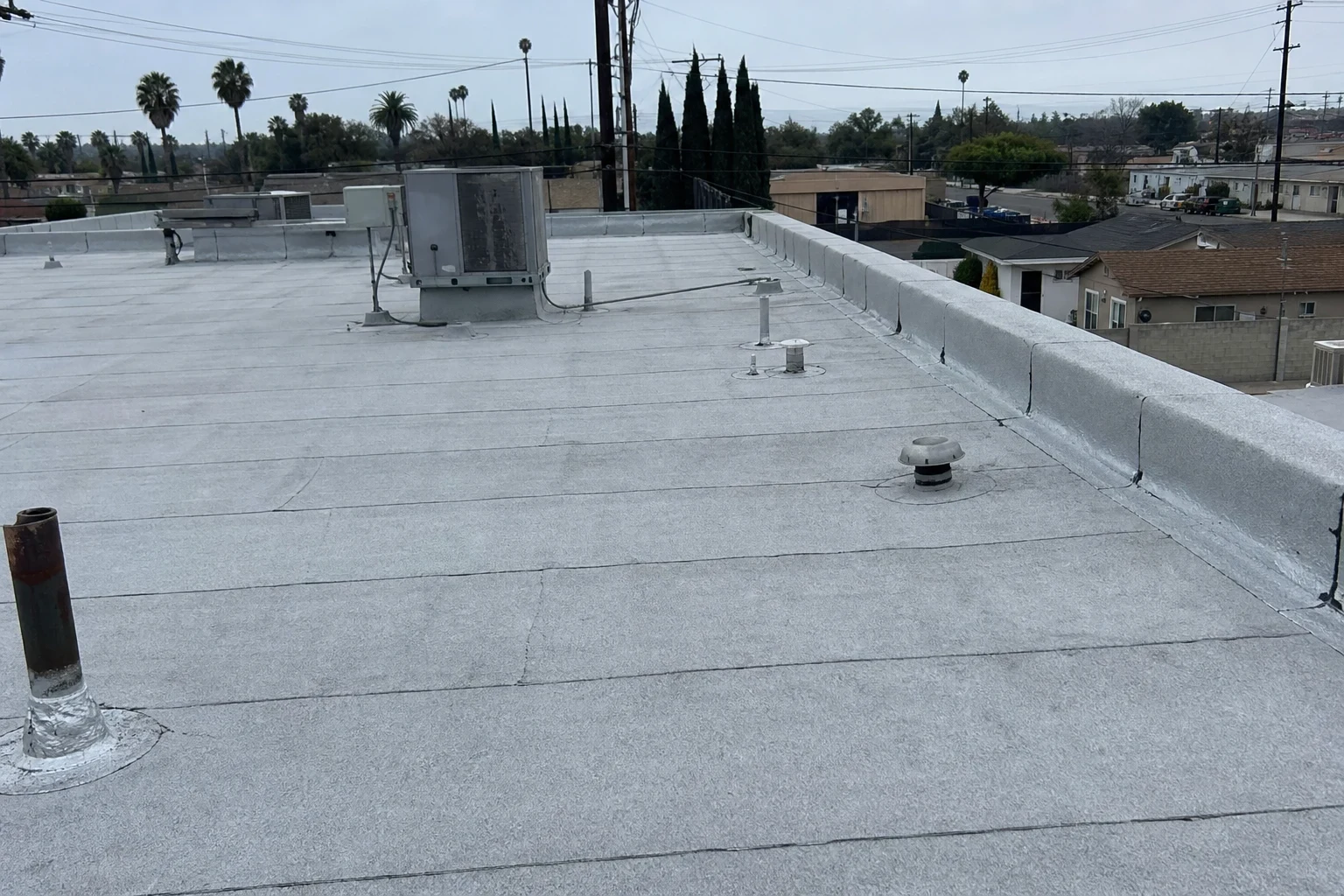
We'll walk the roof, take photos and give you a free written estimate. One person handles it from there.